Late August in Anchorage does not announce itself with a date. It announces itself with a handful of small, specific changes stacked on top of each other over about three weeks. If you know what to watch, you get a compressed season that runs from the last week of August through the first frost, and it rewards residents far more than visitors.
Most of what you read about "fall in Alaska" treats the season as a single mood. The reality on the ground is a sequence. The coho move from one creek to another. The color starts on the ground, not in the trees. The peaks go white before the birches go yellow. The fair opens, the fair closes, and by then the rut is starting on the Hillside.
The coho handoff from Ship to Campbell
For most of August, Ship Creek is still the story. The Alaska Department of Fish and Game notes that Ship Creek silver salmon fisheries peak in late July to early August, while Campbell Creek peaks around mid- to late August. That handoff is the first real fall signal in the Anchorage bowl, and it changes where residents fish on a Saturday morning.
The practical difference matters. Ship Creek is tide-driven, urban, and crowded through the king and pink windows. Campbell Creek runs quieter through Taku-Campbell and the Campbell Creek Greenbelt, and the department's own notes say most silver success there comes early in the morning, before the sun hits the water. If you have been fishing Ship on incoming tide all summer, the calendar cue is to flip your alarm earlier and drive to the greenbelt instead. Silver season on Ship Creek itself continues into September at the William Jack Hernandez Sport Fish Hatchery viewing corridor, where returning coho are visible from the foot path outside the facility from early July through September.
Red comes before yellow
The second cue is a visual one.
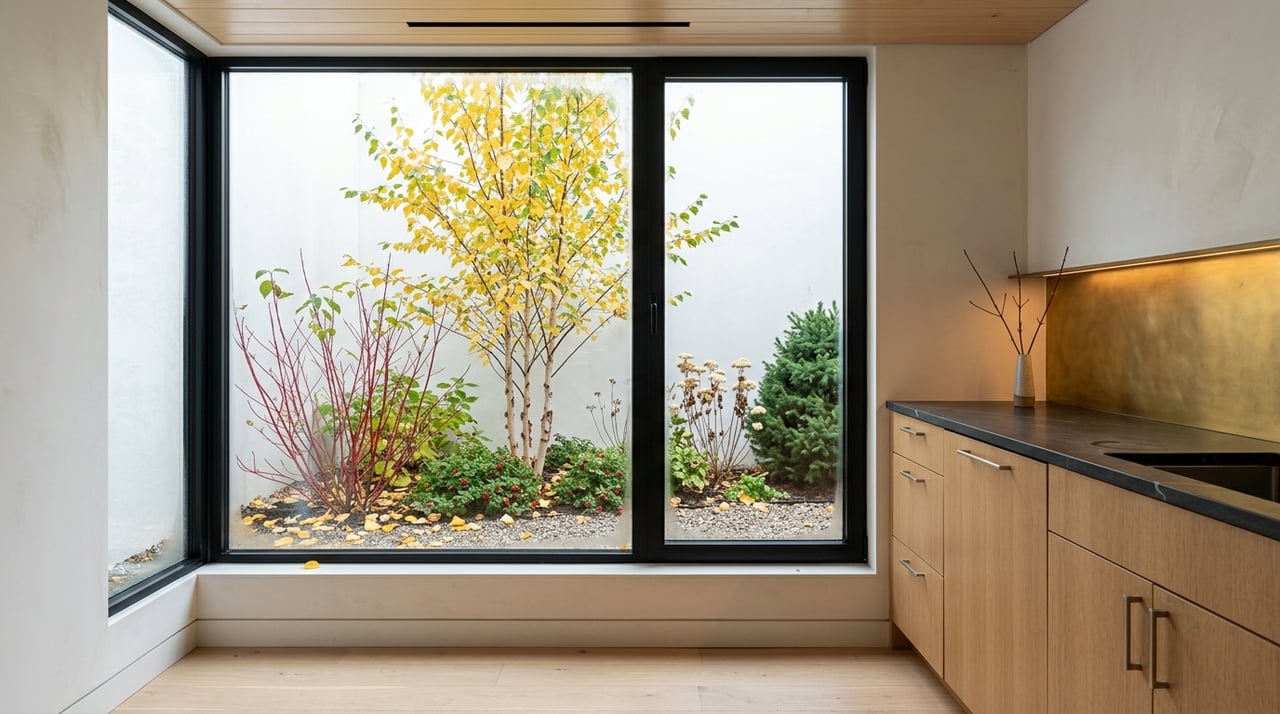
Fall color in Southcentral Alaska starts at the ground and works up. On the Chugach slopes above the city, blueberry bushes and fireweed turn red first, well before the birch and cottonwood forests below start yellowing. Visit Anchorage's autumn guide describes the sequence bluntly: color begins in the mountains, birch and cottonwood follow, and the yellow moves south along Turnagain Arm generally by early October. Peak in the Anchorage bowl itself sits mid- to late September.
Working alongside the red phase is termination dust, the local name for the first snowcap on the high peaks. It is not a weather forecast. It is a marker, and once it appears on the Chugach ridgelines above the city, the countdown to the birch turn is measured in days, not weeks.
The three-week overlap, as a reference
Cue | Typical window | Where to read it |
|---|---|---|
Campbell Creek coho peak | Mid- to late August | Campbell Creek Greenbelt, early morning |
Alaska State Fair | Aug 21 – Sept 7, 2026 | Palmer, closed Tuesdays and Wednesdays |
Termination dust | Late August into early September | Chugach ridgelines from anywhere in town |
Red phase, alpine | Late August through early September | Glen Alps, Flattop, Powerline Pass |
Aurora season reopens | Late August | Dark-sky sites north of Eagle River |
Birch and cottonwood yellow | Mid- to late September | Eklutna Lake, Eagle River, Chester Creek |
Moose rut ramps | Late September into October | Glen Alps, Kincaid, Campbell Creek trails |
Turnagain Arm color | Into early October | Seward Highway south of Potter Marsh |
First frost, lowbush cranberries sweeten | Late September, variable | Chugach foothills |
None of these are month-long events. Most run seven to ten days at their best, and they stack.
What Glen Alps actually does in late September
The Municipality of Anchorage estimates around 1,600 moose in the Anchorage Bowl, and the Parks department is straightforward that they can appear on any trail at any time. What changes in late September is behavior, not population.
Alaska Department of Fish and Game describes the rut as a late-September and October event when bulls joust for the attention of cows. On the ground at Glen Alps, that means bulls congregating in the bowl below the Powerline Trail, antler scraping on brush from early September, and by later in the month, the sound of antlers actually banging on trees carrying across the tundra. The Chugach parking pass is $5 daily or $30 annual at REI, and rangers do ticket cars parked in the fire lane at the trailhead lot, so arrive early on a clear weekend morning.
The safety rules include the Muni Parks listing of warning signs: ears pinned back, hackles up, head lowered, lip licking, ground stomping. The $300 fine for feeding wildlife exists because habituated moose are the ones that actually hurt people.
The Palmer detour, and what it does to your week
The Alaska State Fair runs August 21 through September 7, 2026, at the fairgrounds on the Glenn Highway in Palmer, about forty-five minutes from midtown. The 2026 run is eighteen calendar days but only fourteen operating days, because the fair is closed Tuesdays and Wednesdays. The 2026 concert bookings include CAKE, Megadeth, and Modest Mouse, and the Giant Cabbage Weigh-Off is on September 4.
For an Anchorage resident, the fair functions as a calendar anchor more than a destination. The Glenn Highway backs up on the last two Saturdays of the run, particularly late morning outbound and late evening inbound. If your fall weekend plan includes both a fair day and a hike, do them the same day, and go north first. The Matanuska Valley color starts changing early to mid-September along the Glenn corridor, which means a fair-plus-drive loop pulls double duty on any Thursday or Friday inside the run.
The fair is also the working definition of the local season line. It has been described for decades as the state's last hurrah before winter, and the day after it closes, Anchorage genuinely feels different. Rental car rates drop. Restaurant reservations open up.
The overlap most residents underuse
The window that actually sets Anchorage apart from either summer or winter is the last week of September through the first week of October. Aurora season officially reopens in late August, but Travel Alaska points to the sweet spot as mid-September through mid-October, with geomagnetic activity statistically elevated around the fall equinox. During that same fortnight the birches are yellow, the rut is active, coho are still in the lower creeks, and lowbush cranberries in the foothills are sweetening after the first frost.
That is the compressed season. Aurora above, gold below, rut in the middle, and the summer's last silvers still moving. It exists for about ten to fourteen days, and it is close to invisible on national travel calendars because the cruise-ship crowds have already gone home and the ski marketing has not started.
A workable use of that window: an early-morning walk on the Campbell Creek Greenbelt for the last of the silvers and the yellow along the water, a mid-day drive to the Eagle River Nature Center or Eklutna Lake for the full birch canopy, and a dark-sky check north of Eagle River after 10 p.m. If Kp forecasts run above 4, the aurora is visible from most of the north-facing hillsides above town. On a clear weekend that combination is genuinely hard to beat anywhere in North America, and it is available to anyone with a full tank and a warm jacket.
A small note on the transition itself
Anchorage's fall is not long. From the first termination dust to the first serious snow at sea level, most years run six to eight weeks. The reason to read the cues carefully is that the good version of the season is not the whole thing. It is the two- or three-week overlap in the middle, and it moves earlier or later by a week or two each year depending on how the alpine cools.
The residents who get the most out of it are the ones who treat the calendar as a stack of specific dates on specific creeks and ridgelines rather than a general vibe. Watch the ground for red. Watch the peaks for white. Fish Campbell in the dark. Check the Kp index before bed. Skip the fair on a Saturday, hit it on a Thursday.
If a move within the Anchorage area is on your horizon and you would like a real conversation about neighborhoods, home performance in shoulder seasons, or how the local calendar shapes the way homes here get used, reach out to Alaska Luxury Homes to schedule a free consultation.