If your heating bills feel like a second mortgage in winter, you are not imagining it. Anchorage is a heating-heavy market, so the home features that matter most are often the ones you do not immediately see, like air sealing, insulation, and well-chosen window upgrades. If you are buying, selling, or planning improvements, this guide will help you focus on the energy-efficient features most likely to pay off in comfort, operating costs, and resale confidence. Let’s dive in.
Why energy efficiency matters in Anchorage
Anchorage has long, cold winters that put steady pressure on a home’s building envelope and heating system. NOAA data for Anchorage Merrill Field shows about 9,902 heating degree days and a January mean daily temperature of 15.4°F, while the Department of Energy places Anchorage in climate zone 7.
That matters because homes here are asked to hold heat for much of the year. In practical terms, the features that reduce heat loss usually offer the clearest value, especially when they improve both comfort and monthly utility costs.
Start with air sealing and insulation
If you want the biggest impact, start with the parts of the home that control heat loss. The Department of Energy says sealing air leaks around floors, walls, ceilings, windows, doors, and fireplaces can save roughly 5% to 30% per year.
Just as important, air sealing works best when it is paired with insulation, moisture control, and ventilation. That is why a home energy audit or weatherization assessment is often the smartest first step before spending money on new equipment.
What buyers should look for
When you tour a home in Anchorage, ask practical questions about the attic, walls, and floors. The most useful details are often simple and specific.
Look for:
- Attic insulation depth and documented R-value
- Signs that rim joists and attic bypasses have been sealed
- Floor insulation over unheated spaces
- Notes from a recent energy audit or weatherization work
- Clear evidence that insulation was installed properly, not just added quickly
For climate zone 7, DOE guidance recommends R-60 for an uninsulated attic, R-49 for an attic with 3 to 4 inches of existing insulation, and R-38 for an uninsulated floor. DOE also notes that installation quality matters because compressed insulation and thermal bridging can reduce real-world performance.
What sellers should document
If you are preparing to sell, energy efficiency is easier for buyers to trust when you can show objective details. Instead of saying your home is energy efficient, show attic insulation levels, weatherization records, service invoices, or product labels.
That kind of documentation reduces uncertainty. In Anchorage, buyers often respond well to features that signal winter comfort and lower surprise costs after move-in.
Do not overlook roof and attic details
In cold climates, roof performance is part of the energy conversation. DOE guidance for cold-climate eaves says sealing the eaves should be done in climate zone 5 and higher, and that good air sealing of the ceiling plane, adequate attic insulation, and attic or roof ventilation can help reduce ice dams.
For Anchorage homeowners, this means roof-edge detailing and attic ventilation are more than maintenance topics. They can affect heat loss, moisture management, and winter durability.
Why this pays off
A home with weak attic sealing can lose heat upward all winter. That heat loss may also contribute to uneven roof temperatures, which can increase the risk of ice dam issues.
When buyers see evidence that the attic plane has been sealed and insulated well, it often signals thoughtful upkeep. For sellers, that can be a meaningful value point because it speaks to comfort and maintenance, not just utility bills.
Upgrade windows strategically
Windows matter, but in Anchorage they are usually most effective after the home’s basic envelope has been improved. DOE says heat gain and heat loss through windows account for 25% to 30% of residential heating and cooling energy use.
ENERGY STAR classifies Anchorage in the Northern climate zone for windows, doors, and skylights. Its general target for Northern climates is a lower U-factor window, with 0.22 or less as the benchmark.
What to look for in cold-climate windows
If you are comparing windows, focus on whole-unit performance and installation quality. DOE recommends looking for:
- Low U-factor ratings
- Gas-filled window units
- Low-e coatings
- Whole-unit U-factor and SHGC ratings
- Proper installation that limits air leakage
For buyers, labeled and rated windows help you compare homes more clearly. For sellers, documented window specs are often more persuasive than a general note that the windows were replaced.
When storm windows make sense
Not every Anchorage home needs full window replacement right away. If existing windows are structurally sound, DOE says improving them may be the more cost-effective path.
For older homes, ENERGY STAR certified storm windows can be a lower-cost alternative. ENERGY STAR estimates they can save about 20% on annual heating and cooling bills over single-pane clear glass windows, with a typical incremental payback of about three years on a national-average basis.
That does not mean every window project will fully pay for itself through energy savings alone. Even ENERGY STAR notes that modern windows often improve comfort and can increase home value, but may not recover their full cost strictly through lower bills.
Heating systems can pay off, but only in the right order
It is easy to focus on a new furnace or heat pump because equipment is visible and easy to market. In reality, equipment tends to perform best when the home has already been weatherized.
DOE says heat pumps are an energy-efficient alternative because they move heat rather than generate it. Modern cold-climate heat pumps are designed to perform at temperatures as low as 5°F, and ductless mini-splits can be a practical retrofit option for homes without ductwork.
Why weatherizing first matters
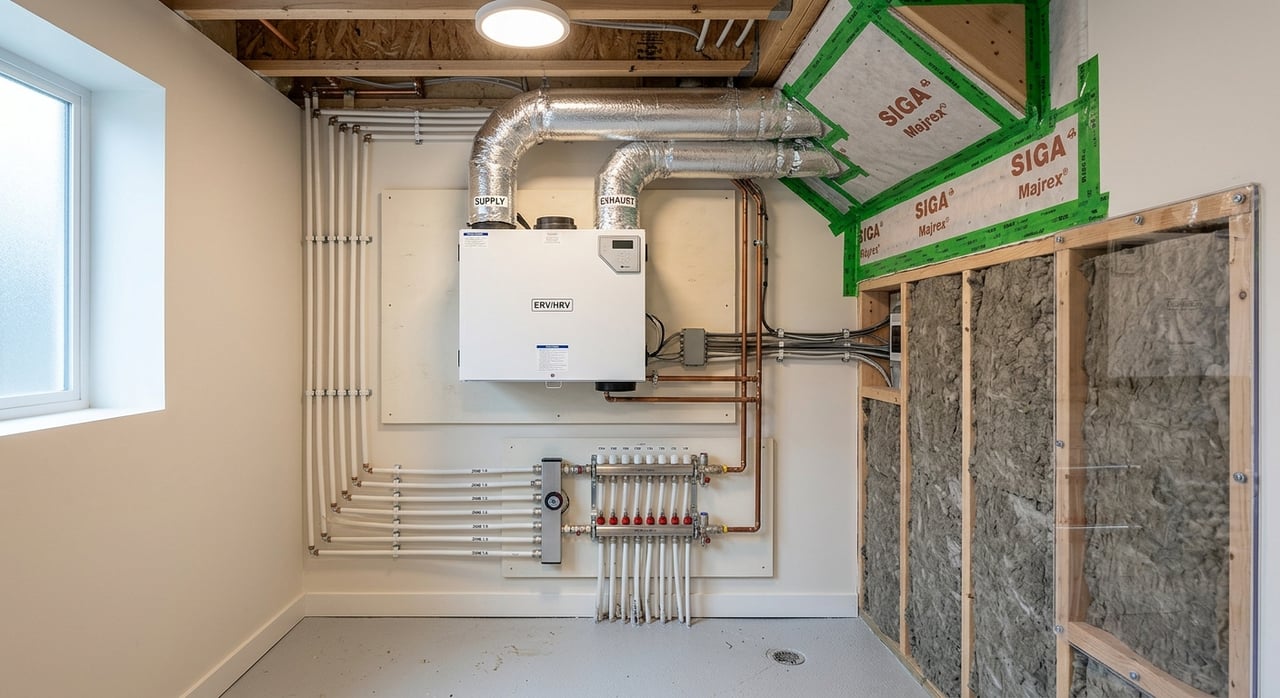
If a home leaks heat through the attic, walls, or ducts, a high-efficiency system may not deliver the comfort or savings you expect. DOE specifically recommends weatherizing first to get the best results, especially in older homes.
That is a useful takeaway whether you are buying or selling. A newer heating system is a plus, but it is stronger when paired with evidence of air sealing, insulation, and duct improvements.
Ducts and controls matter too
Duct performance can have a major impact on real-world efficiency. DOE notes that poorly insulated or leaky ducts can lose up to 60% of heated air before it reaches the register.
Programmable thermostats also help. DOE says they can save as much as 10% a year when temperatures are set back for eight hours.
For buyers, this means the best heating setup is not just about the equipment brand or age. Ask whether ducts are sealed and insulated, whether the system has been maintained, and whether controls support consistent, efficient operation.
Local incentive to know about
Local programs can improve the economics of an upgrade. Chugach Electric’s Heat Pump Incentive Program says residential members may receive up to $900 toward a qualifying heat pump system, with preference for ENERGY STAR cold-climate certified units and installation by a manufacturer-approved HVAC installer.
If you are considering a heat pump, that incentive may be worth reviewing early in the planning process. Eligibility details and program requirements can shape which systems make the most sense.
The best payoff for buyers
If you are buying in Anchorage, the highest-value energy features are usually the ones that make winter living easier and more predictable. That often means solid insulation, fewer drafts, well-performing windows, and a heating system that has been properly maintained.
A useful buyer checklist includes:
- How much attic insulation is installed?
- Has the home been air sealed?
- Are windows labeled and rated for cold climates?
- Is the heating system sized appropriately and serviced regularly?
- Are ducts sealed and insulated?
- Is there documentation from an energy audit, weatherization project, or rebate-eligible upgrade?
These questions can help you compare homes beyond surface finishes. In Anchorage, comfort and operating performance are part of the long-term value equation.
The best payoff for sellers
If you are selling, the most marketable upgrades are usually the ones that lower buyer uncertainty. Draft reduction, attic and roof insulation improvements, documented window performance, and heating system service records are often easier for buyers to understand and trust.
The goal is not to overstate savings. It is to present clear, factual information that helps a buyer see the home has been cared for and improved thoughtfully.
That approach fits especially well in Anchorage, where buyers often pay close attention to winter comfort, durability, and operating costs. Strong presentation matters, but so does proving what is behind the walls and above the ceiling.
How to prioritize your next step
If you own a home and are deciding where to invest, start with the envelope first. Air sealing and insulation usually offer the clearest payoff in Anchorage because they address the main issue: heat loss.
After that, evaluate windows, heating equipment, ducts, and controls based on the home’s condition and documentation. If you are buying or selling, focus on measurable details like R-values, labels, model numbers, and service history.
In a market like Anchorage, energy efficiency is not just a green talking point. It is part of how a home delivers comfort, supports long-term value, and feels easier to own through the winter season.
If you want help evaluating which energy-efficient features will matter most to buyers or how to position your home’s upgrades clearly in the Anchorage market, schedule a free consultation with Stephanie Richardson.
FAQs
What energy-efficient home feature pays off most in Anchorage?
- In Anchorage, air sealing and insulation often provide the clearest payoff because the market is heating-heavy and reducing heat loss usually improves both comfort and operating costs.
What window features should Anchorage buyers look for?
- Anchorage buyers should look for cold-climate window performance details such as low U-factor ratings, low-e coatings, gas-filled units, and clear whole-unit labels showing rated performance.
Are new windows always the best energy upgrade in Anchorage?
- No. In many Anchorage homes, improving air sealing and insulation first delivers better value, and structurally sound older windows may be improved with storm windows rather than full replacement.
Do heat pumps work in Anchorage’s cold climate?
- Yes. DOE says modern cold-climate heat pumps are designed to perform at temperatures as low as 5°F, and they can be a practical option when matched to the home and installed properly.
What should Anchorage sellers show buyers about energy efficiency?
- Anchorage sellers should share objective details such as insulation R-values, window labels, model numbers, maintenance records, and any documentation from energy audits or weatherization work.
Is there a local heat pump incentive in Anchorage?
- Chugach Electric says residential members may qualify for up to $900 toward a qualifying heat pump system, subject to current program requirements.