Wondering why some Anchorage homes feel cozy, bright, and effortless all winter while others feel drafty and dim? In a place where December can bring average highs around 24.7°F, lows near 11.3°F, roughly 5.5 hours of daylight, and a normal winter snowfall of 74.5 inches, luxury looks different than it does in warmer markets. Here, a truly luxurious home is one that feels warm, light-filled, dry, and easy to live in every day. Let’s look at the design choices that can help you create that kind of winter comfort in Anchorage.
Winter Luxury Starts With Comfort
In Anchorage, winter design is shaped by real conditions, not just style trends. Cold temperatures, frequent snow, and limited daylight all affect how your home feels and functions.
That is why luxury in an Alaska home often comes down to performance. If your home stays warm without drafts, brings in precious daylight, and handles wet gear without constant mess, it can feel elevated in a very practical way.
Make the Entry Work Harder
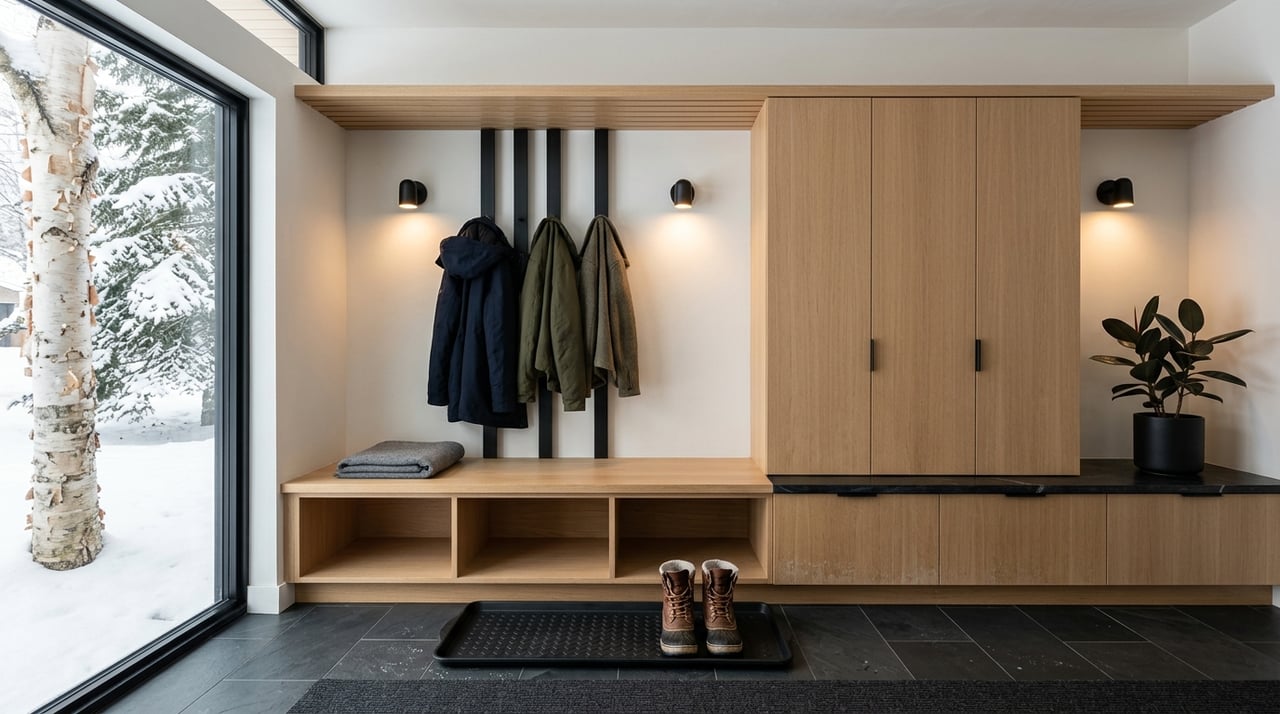
One of the most useful luxury features in an Anchorage home is a well-planned entry or mudroom. It creates a buffer between the cold outdoors and your main living space, which helps contain snow, moisture, and chilly air.
This matters in Alaska because doors face major winter stress. The Cold Climate Housing Research Center notes that indoor and outdoor temperatures can differ by more than 100 degrees in winter, which can lead to sticking, jamming, and warping.
If you are updating an entry, newer pre-hung metal or fiberglass doors often insulate better than older all-wood doors. It is also worth being careful with large sliding glass doors, since they can become major heat-loss points if they are not chosen and detailed well.
Features That Improve Entry Comfort
A winter-friendly entry can include:
- Durable flooring that handles snow and moisture
- A bench or seating area for boots
- Closed storage for coats and outdoor gear
- Good task lighting for dark mornings and evenings
- Space that keeps wet items from spreading into living areas
These details may sound simple, but in daily winter life, they make your home feel calmer and more polished.
Control Moisture for a Healthier Feel
Warmth alone does not create comfort. Anchorage homes also need balanced indoor moisture levels so the air does not feel too damp or create condensation issues.
The Alaska Housing Finance Corporation advises keeping indoor relative humidity between 30% and 50%. It also warns that humidity above 50% can raise mold risk.
That means a luxurious winter home should not feel stuffy or wet inside. Good ventilation matters just as much as good insulation.
Why Ventilation Matters
Balanced ERV or HRV ventilation systems can help bring in fresh air while recovering heat from outgoing air. According to CCHRC, ERVs can also help maintain indoor humidity around 30% to 40% while reducing cold drafts.
If your home already has vents or an air exchanger, AHFC advises against covering them. Those systems play an important role in keeping the indoor environment comfortable and stable through the winter months.
Bring In More Light Without Losing Heat
With only about 5.5 hours of daylight around December 15 and about 6.4 hours around January 15, lighting design has a big impact on how your home feels. A dark room can feel smaller, colder, and less inviting, even if it is beautifully furnished.
That is why window strategy matters so much in Anchorage. During the day, opening window coverings to capture available sunlight can add both light and a bit of passive warmth. At night, closing curtains or shades helps reduce heat loss and improve comfort.
Choose Windows for Winter Performance
In cold climates, windows should be selected for:
- Low U-factor
- Appropriate solar gain
- Low air leakage
- High condensation resistance
These performance details support the look and feel you want. Large windows can absolutely feel luxurious in Anchorage, but they need to be designed for the climate.
The U.S. Department of Energy also notes that insulated cellular shades and low-e storm windows can improve winter comfort. Depending on the existing window, storm windows can save 12% to 33% on heating and cooling costs.
Be Careful With Skylights
Skylights can be appealing in Anchorage because they bring in extra daylight when you need it most. In the right home, they can make a kitchen, hallway, or upper-level living area feel brighter and more open.
But they need to be approached carefully. The Department of Energy notes that skylights can lose heat in winter, so efficient glazing and careful installation are essential.
A skylight can feel like a luxury upgrade if it is well planned. If it is not, it can become a weak point that works against winter comfort.
Use Lighting That Adds Warmth and Efficiency
Artificial lighting does a lot of work during Anchorage winters. Since daylight is limited, your home needs lighting that feels warm, flattering, and dependable across long evenings.
LEDs are the strongest modern option for most homes. The Department of Energy says residential LEDs use at least 75% less energy and last up to 25 times longer than incandescent bulbs.
There is also an Alaska-specific detail to keep in mind. CCHRC warns that poorly detailed recessed lights can create air leakage, heat loss, and even moisture or ice-dam problems, so surface-mount LEDs or carefully detailed airtight fixtures are often the better fit.
Lighting Ideas That Support Winter Luxury
A thoughtful lighting plan often includes:
- Ambient lighting for overall brightness
- Task lighting in kitchens, bathrooms, and entries
- Accent lighting to highlight architecture or texture
- Warm, consistent color temperature throughout main spaces
The goal is not just brightness. It is creating a home that feels welcoming from morning to night.
Focus on Air Sealing and Insulation First
If you are deciding where to invest for the biggest winter comfort payoff, start with the basics. Air sealing and insulation are usually the core first steps because they reduce drafts, cold spots, and heat flow.
The Department of Energy recommends air sealing to cut drafts and improve comfort and durability. AHFC notes that heating accounts for 68% to 77% of a home’s energy usage and that insulating, air sealing, and related upgrades can reduce heating costs by 30% or more.
That is a meaningful difference in Anchorage. A home that holds heat well feels quieter, steadier, and easier to enjoy in winter.
Pay Attention to Attic and Foundation Areas
AHFC notes that the floor and ceiling have the highest potential for heat loss. That makes attic and foundation insulation especially important in Alaska.
If you are planning upgrades, a whole-house energy assessment can help you understand where improvements will have the most impact before adding insulation.
Think of Heat Pumps as Part of the Whole System
Heat pumps are becoming more relevant in Anchorage, especially for homeowners who want better efficiency along with comfort. They are best viewed as part of a broader strategy, not a stand-alone fix for a drafty house.
AHFC guidance says air-source heat pumps can work efficiently to about 0°F and still heat down to around -20°F depending on the model, though backup heat is usually needed during very cold days. In a well-insulated, airtight home, that can support a more comfortable and efficient winter living experience.
This fits well with the Alaska version of luxury. Smart systems matter most when the home itself is already designed to perform well.
Rethink Indoor-Outdoor Flow for Alaska
In many markets, indoor-outdoor flow suggests oversized sliders and big openings to patios or decks. In Anchorage, the idea needs a more climate-aware approach.
CCHRC notes that swing doors generally seal better than sliding doors. If you want a glass door for views or access, double-pane construction, low-e coatings, and thermal breaks should be high on your priority list.
You do not have to give up openness or connection to the landscape. You just want to make sure those features support winter comfort instead of undermining it.
Energy Performance Can Support Long-Term Value
In Anchorage, winter-friendly design is not just about how a home feels today. It can also matter when you buy, sell, or evaluate long-term costs.
AHFC currently offers Energy Efficiency Interest Rate Reduction pricing for energy-efficient homes. It also offers a $10,000 New Home Construction Rebate for eligible new homes that meet at least a 5-Star Plus standard.
Those programs show that performance has practical value in Alaska. Homes that balance comfort, energy efficiency, and thoughtful design can stand out for both daily living and future resale conversations.
What Luxury Looks Like in an Anchorage Winter
A luxurious Anchorage home does not need to be flashy. More often, it feels quiet, warm, bright, and easy to maintain through the coldest months of the year.
That can mean a better-insulated envelope, a smarter entry, more effective lighting, better moisture control, and windows and doors chosen for this climate. These are the details that support the kind of everyday comfort people remember when they walk into a home in January.
If you are buying, selling, or thinking through which winter-focused features add the most value in Anchorage, Stephanie Richardson can help you evaluate comfort, presentation, and long-term performance with a calm, informed approach.
FAQs
What makes a home feel luxurious in an Anchorage winter?
- In Anchorage, winter luxury usually comes from warmth, brightness, dryness, and ease of daily use rather than purely decorative upgrades.
Which home upgrade gives the biggest winter comfort payoff in Anchorage?
- Air sealing and insulation are usually the most important first steps because they reduce drafts, cold spots, and heat loss.
Are skylights worth adding to a home in Anchorage?
- Skylights can be worth it for extra daylight, but they need efficient glazing, insulation, air sealing, and careful placement to avoid winter heat loss.
Do large glass doors make sense for Anchorage homes?
- Yes, if they are high-performance and well sealed, but poorly performing sliding doors can become a major heat-loss path.
Why is moisture control important in Anchorage homes during winter?
- Moisture control helps reduce condensation and mold risk, and AHFC advises keeping indoor relative humidity between 30% and 50%.
Do energy-efficient features matter when selling a home in Anchorage?
- Yes, energy performance can support resale conversations because Alaska financing and rebate programs reward higher-performing homes.